
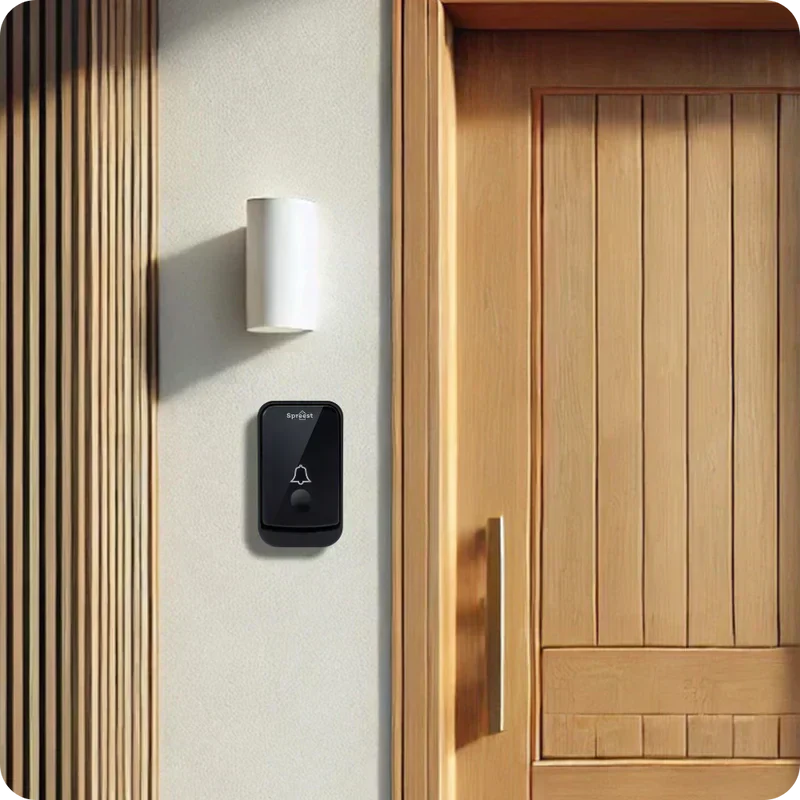
Wireless doorbells are one of the simplest, yet most functional, solutions for improving comfort in the home and office. Unlike traditional wired models, they don't require complicated installation or cable management, meaning they can be installed anywhere. Learn how wireless doorbells work and how they can be used.
How does a wireless doorbell work?
A wireless doorbell eliminates the need to run cables between the button and the sound receiver. It operates by transmitting a radio or internet signal, allowing for convenient use in homes, offices, or warehouses. But how exactly does this process work?
Transmitter - the heart of the doorbell system
The transmitter, or doorbell button, activates the entire mechanism. When pressed, an electrical signal is generated, which is then converted into radio waves or a pulse sent via Wi-Fi or Bluetooth. Some models even allow multiple transmitters to be assigned to a single receiver.
Receiver - sound and additional functions
The receiver is the second, equally important part of the system. It receives the signal sent by the transmitter and converts it into an audible or visual signal notifying of a visitor's arrival. Depending on the model, the receiver can be powered by a wall outlet, batteries, or even a solar panel. Some modern wireless doorbells offer tone selection, volume control, and even connection to a smartphone app.
Kinetic bells - an innovative solution without batteries
Kinetic doorbells are a modern version of wireless doorbells that eliminate the need for batteries in the transmitter. They use kinetic energy, or the mechanical force of pressing a button, to generate an electrical signal and transmit it to the receiver.
Range and stability of operation
The range of a wireless doorbell depends on many factors, from the transmission technology used to the room layout and wall thickness. Standard radio models can operate at distances ranging from 50 to 300 meters, but if the doorbell is designed to work with Wi-Fi, its range will depend on the network's signal strength. It's also worth considering signal protection, as the simplest models risk interference from other devices operating on a similar frequency.
Wireless doorbell application - where will it work best?
Wireless doorbells are versatile devices that can be used in a variety of places - from apartments and single-family homes to offices, companies and commercial spaces.
Doorbell at home
In single-family homes and apartments, a wireless doorbell is primarily a convenient way to notify visitors. Modern doorbells can be paired with a video camera, allowing you to see the person standing at the entrance without having to open the door.
Wireless doorbell in the company
In business environments, doorbells play an important role, especially in offices, reception areas, and warehouses. They enable efficient access management. In large spaces, such as production halls or warehouses, a wireless doorbell can serve as a signal notifying of a goods delivery or a customer's arrival.
Which modern doorbells are worth choosing?
Modern models offer much more than just a basic sound signal – they can have various operating modes, power supplies tailored to individual needs, and additional features such as video preview or mobile app control. Choosing the right model should depend on the conditions in which it will be used and the user's expectations regarding its functionality.
Power supply - batteries or mains?
The first decision you need to make is choosing a power supply. There are two main solutions available on the market.
- Battery-powered wireless doorbells offer maximum portability and easy installation, as they don't require a power connection. However, it's worth remembering to replace the batteries every few months or choose a model with a rechargeable battery.
- Mains-powered doorbells plug directly into a wall outlet, eliminating the need for battery replacement but requiring access to a power source at the installation site. They are an ideal solution for those who value reliable operation and don't want to worry about battery levels.
- Kinetic doorbells - a battery-free solution that eliminates the need to recharge or replace a power source, making them one of the most practical options.
Sound and Personalization
While doorbells used to offer a single, standard sound, today many modern doorbells allow you to choose a melody, adjust the volume, and even save your own notification sound. This is especially useful in homes with elderly people or small children – you can adjust the sound level to ensure it's clearly audible but not intrusive.
Smart features - doorbells with video preview
Doorbells with cameras and the ability to connect to a mobile app are becoming increasingly popular. They offer live video viewing, allowing users to see who's at the door, even when they're away from home.
Wireless doorbell installation and configuration - step by step
One of the biggest advantages of wireless doorbells is their quick and hassle-free installation. Unlike traditional wired models, which require running cables and drilling into walls, modern doorbells can be installed independently in minutes.
- Choosing the right place for the transmitter and receiver - the transmitter should be easily accessible and the receiver should be placed where the sound can be heard clearly.
- Pairing the transmitter with the receiver - most models connect automatically when you press the pairing button.
- Sound and notification configuration - volume adjustment, selection of melody or silent mode.
- Testing - checking whether the doorbell works properly under various conditions.
Why choose modern wireless doorbells?
A wireless doorbell is a small device that can significantly improve the convenience and safety of everyday life. Whether you're looking for a simple home solution or a sophisticated system with intelligent features, you'll find a model tailored to your needs. If you'd like to learn more about modern doorbells, explore the available options and choose the model that best suits your needs.



1 comment
DoorbellS
Great overview of wireless doorbells! I especially like how you explained the difference between battery powered mains powered and kinetic models. I recently installed a video enabled wireless doorbell at home and it is amazing to see who is at the door even when I am away. The smart features and easy installation really make these devices a must have for modern homes. Thanks for breaking it down so clearly!
Leave a comment
This site is protected by hCaptcha and the hCaptcha Privacy Policy and Terms of Service apply.